How can Security Management help organizations protect engineering data while supporting collaboration across connected Systems Engineering environments?
Modern Systems Engineering environments are increasingly connected. Requirements, models, simulations, verification artifacts, reports, and other engineering data no longer reside in a single tool or repository. Instead, they are distributed across multiple platforms, teams, suppliers, and organizations.
This growing level of digitalization brings significant benefits, but it also introduces new challenges. As engineering data flows across tools and organizational boundaries, controlling who can access information and execute operations becomes essential. Security management is no longer an optional administrative function—it is a fundamental requirement for protecting engineering assets and maintaining trust across the engineering ecosystem.
SES ENGINEERING Studio includes an integrated Security Management capability specifically designed for Systems Engineering environments, helping organizations secure their engineering operations without compromising collaboration.
The Growing Need for Security Management in Systems Engineering
Systems Engineering projects involve a wide range of stakeholders, from requirements engineers and architects to verification teams, project managers, and external partners. These teams interact with requirements, MBSE models, lifecycle information, risks, traceability links, verification activities, and reports across interconnected environments.
Without appropriate security controls, organizations face several risks. Users may gain access to operations outside their responsibilities, sensitive engineering information may be exposed, and critical lifecycle or traceability processes may be altered unintentionally. Managing collaboration across multiple organizations can also become increasingly difficult when permissions are not clearly defined.
Effective security management ensures that users have access only to the information and operations required for their role, helping organizations maintain control while supporting collaboration.
Security Management in SES ENGINEERING Studio
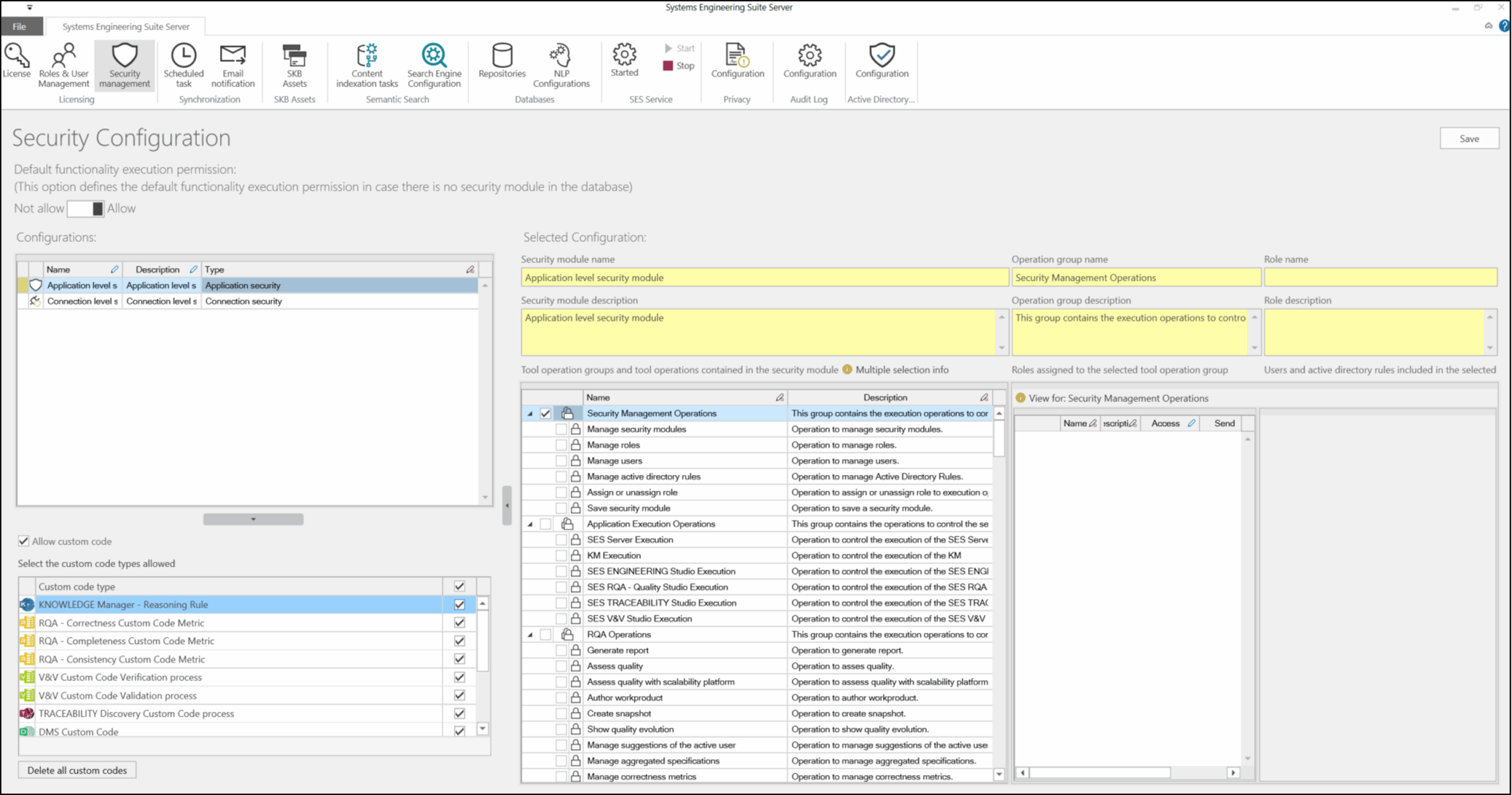
The Security Management capability in SES ENGINEERING Studio provides authentication and authorization mechanisms across the entire SES operational environment.
Organizations can use it to:
- Define users and roles
- Configure permissions
- Secure connected tools and repositories
- Control engineering operations
- Manage both application-level and connection-level security.
The capability also provides controls for custom code execution, helping organizations maintain governance over automated processes and integrations. Because Security Management is integrated directly into the SES environment, it supports a broad range of engineering activities, including lifecycle management, quality management, verification and validation, traceability, and interoperability.
Security at Multiple Levels
SES ENGINEERING Studio applies security controls at two complementary levels.
Application-Level Security
Application-level security governs operations that affect the overall SES environment. This includes activities such as managing users and roles, configuring connections, accessing traceability capabilities, executing lifecycle management functions, and managing reports and system configurations.
These controls help organizations protect critical administrative and operational functions across the platform.
Connection-Level Security
Connection-level security focuses on specific engineering tools, repositories, and data sources connected to SES ENGINEERING Studio.
Examples include IBM DOORS, Capella, Microsoft Office documents, MBSE environments, and simulation repositories. By applying permissions at the connection level, organizations can tailor access rights according to project requirements, engineering domains, or data sensitivity.
This approach provides the flexibility needed in complex engineering environments where different teams often require different levels of access to the same ecosystem.
Managing Permissions Through Roles
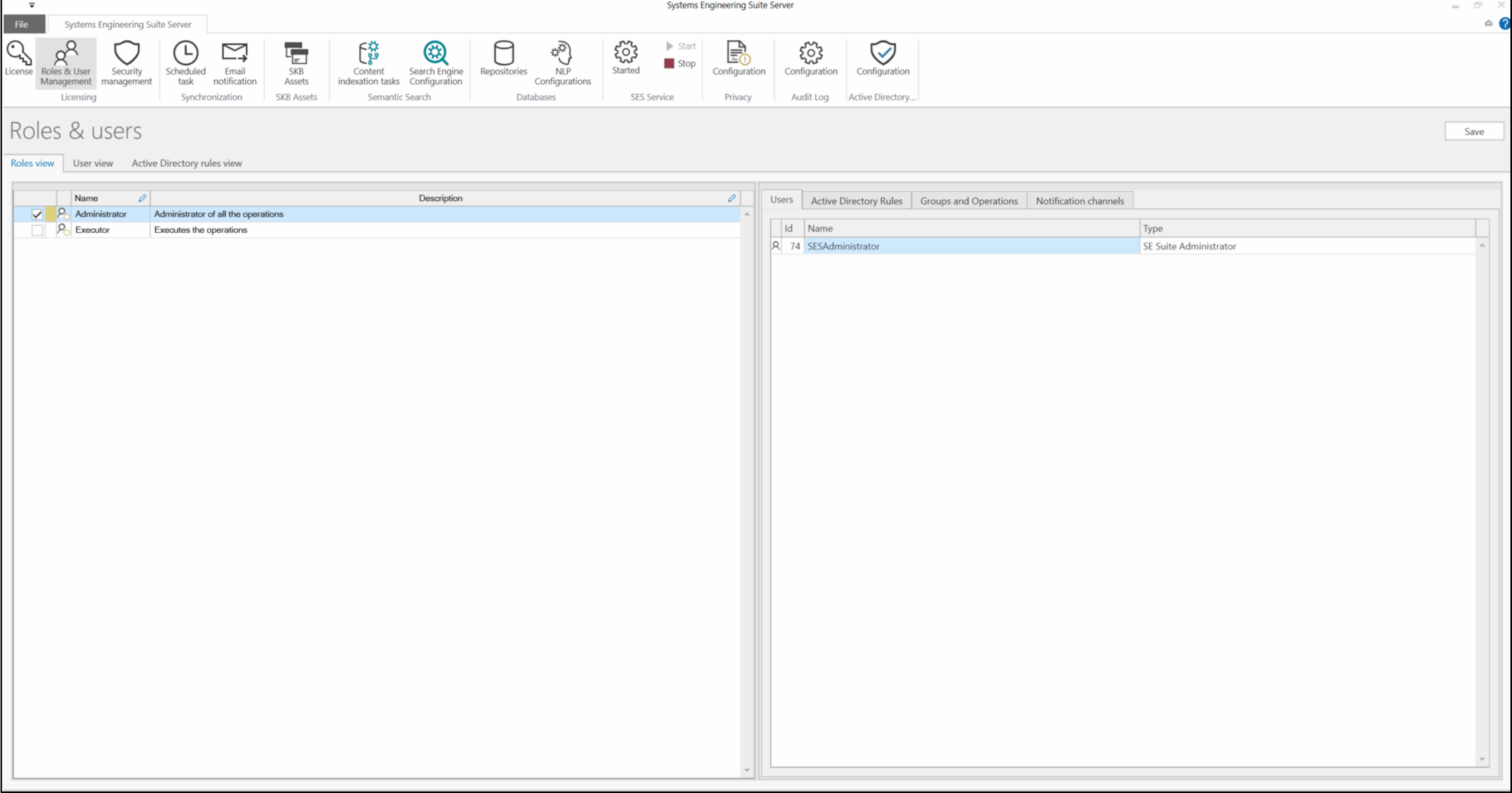
Permissions in SES ENGINEERING Studio are managed through a flexible role-based model that can incorporate users, groups, machines, Active Directory identities, and security modules.
Roles are assigned to specific operations or groups of operations, allowing organizations to align system permissions with established engineering processes and responsibilities.
For example, a Requirements Quality Analyzer (RQA) administrator may be authorized to execute quality assessment operations, while a lifecycle manager can manage project configurations and baselines. Verification engineers may be granted access only to verification and validation activities relevant to their responsibilities.
This role-based approach simplifies administration while ensuring that permissions remain consistent with organizational governance policies.
Active Directory Integration
Many organizations already rely on Microsoft Active Directory to manage authentication and access control. SES ENGINEERING Studio integrates with Active Directory, allowing existing security policies and group structures to be reused within the engineering environment.
By leveraging Active Directory users, groups, and machine accounts, organizations can centralize authentication, reduce administrative effort, and maintain consistency with corporate security standards.
Supporting Secure Digital Thread Implementations
A Digital Thread connects information across tools, disciplines, and lifecycle stages, enabling traceability and continuity throughout the engineering process. However, connectivity alone is not sufficient.
Organizations also need mechanisms to control access, govern permissions, protect interoperability, and ensure that engineering operations are executed only by authorized users.
SES Security Management provides these controls, enabling organizations to implement Digital Thread strategies while maintaining security, governance, and lifecycle continuity across connected engineering ecosystems.
Conclusion
As Systems Engineering continues to evolve toward integrated MBSE and Digital Thread environments, security management becomes a foundational capability rather than a supporting feature.
SES ENGINEERING Studio delivers a flexible and scalable security framework tailored to engineering organizations. By providing robust control over users, permissions, operations, integrations, and lifecycle activities, it helps organizations collaborate securely while protecting the integrity of their engineering ecosystem.
Related Links