Artificial Intelligence is transforming engineering at an unprecedented pace. Large Language Models (LLMs) can generate requirements from natural language prompts, summarize specifications, rewrite user stories, and even propose system behaviors within seconds.
This raises an important question:
Can AI actually write good requirements?
The short answer is yes—but not on its own.
The real challenge isn’t generating text. It’s ensuring that the generated requirements are complete, consistent, verifiable, unambiguous, and aligned with engineering standards.
AI Is Excellent at Generating Content
Modern AI models are remarkably good at producing natural language. Given a prompt such as:
Generate functional requirements for an autonomous drone navigation system.
AI can produce dozens of requirements almost instantly.
For brainstorming, early concept development, or drafting an initial specification, this capability is incredibly valuable. It significantly reduces the time engineers spend creating the first version of a document.
However, generating text is only the beginning of the engineering process.
Writing Requirements Is More Than Writing Sentences
A requirement is not simply a well-written sentence.
A high-quality requirement should be:
- Clear
- Complete
- Consistent
- Atomic
- Verifiable
- Feasible
- Necessary
- Traceable
- Free from ambiguity
These characteristics are defined by systems engineering best practices and standards such as ISO/IEC/IEEE 29148 and are critical for successful system development.
AI may produce grammatically correct requirements while still introducing vague language, hidden assumptions, duplicated information, conflicting statements, or unverifiable acceptance criteria.
In other words, AI can produce requirements that look correct but are difficult to implement, test, or maintain.
The Human Engineer Matters more than what one expects
Experienced requirements engineers contribute far more than writing.
They understand:
- stakeholder intent,
- operational context,
- system constraints,
- regulatory obligations,
- safety considerations,
- architecture,
- verification strategy,
- lifecycle impacts.
These are areas where human expertise remains essential.
AI accelerates engineering, but engineering judgment validates it.
The New Engineering Workflow
Rather than replacing engineers, AI is changing how they work.
Instead of spending hours drafting initial requirements, engineers increasingly spend their time reviewing, refining, validating, and improving AI-generated content.
This shift allows engineering teams to focus on higher-value activities such as design decisions, trade-off analysis, risk assessment, and verification planning.
The Importance of Quality Analysis
Generating requirements is only one step.
Organizations must also answer questions such as:
- Are these requirements ambiguous?
- Do they comply with organizational writing standards?
- Are they complete?
- Are there duplicated requirements?
- Can they be verified?
- Are they traceable?
- Do they contradict existing specifications?
This is where automated and deteministic quality assessment becomes essential.
Rather than relying solely on AI-generated text, organizations should continuously evaluate requirement quality throughout the engineering lifecycle.
AI Needs Engineering Knowledge
General-purpose AI models are trained on vast amounts of public information.
Engineering projects, however, rely on organization-specific knowledge:
- domain terminology,
- controlled vocabularies,
- product architectures,
- reusable requirements,
- engineering standards,
- previous project knowledge.
Without access to this structured knowledge, AI may generate technically plausible but organizationally inconsistent requirements.
Knowledge management therefore becomes a critical component of AI-assisted engineering.
AI Should Work With Traceability
Requirements rarely exist in isolation.
Each requirement may be linked to:
- stakeholder needs,
- system functions,
- design models,
- verification cases,
- hazards,
- risks,
- interfaces,
- regulatory standards.
Maintaining these relationships manually becomes increasingly difficult as projects grow.
AI can assist by identifying potential traceability links, but engineers remain responsible for validating those relationships and ensuring end-to-end traceability across the engineering lifecycle.
AI Is Most Powerful When Combined with Engineering Tools
The future of requirements engineering is not simply “AI writing requirements.”
It is AI working within an engineering environment that provides quality assessment, semantic knowledge, traceability, lifecycle management, and governance.
This combination allows organizations to benefit from AI-generated content while maintaining engineering rigor and compliance.
How SES ENGINEERING Studio Supports AI-Assisted Requirements Engineering
At The REUSE Company, we believe AI should augment engineering—not replace it.
SES ENGINEERING Studio combines AI-assisted capabilities with proven systems engineering practices to help organizations produce high-quality requirements throughout the development lifecycle.
Some of the capabilities include:
Requirements Authoring Assistance
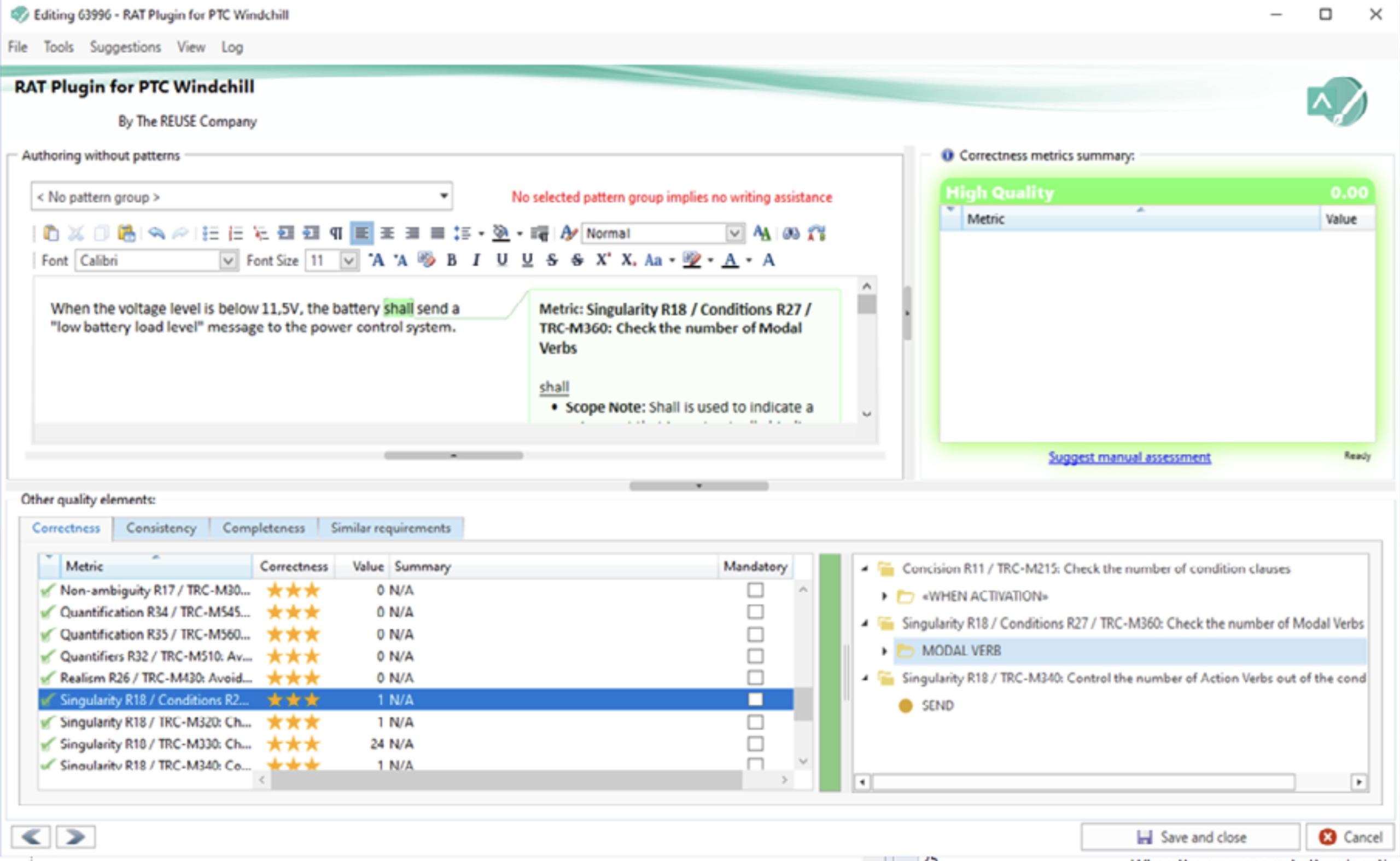
The Requirements Authoring Tool (RAT) provides real-time feedback while engineers write or review requirements, helping improve clarity, consistency, completeness, and compliance with organizational writing guidelines.
Automated Requirements’ Quality Analysis
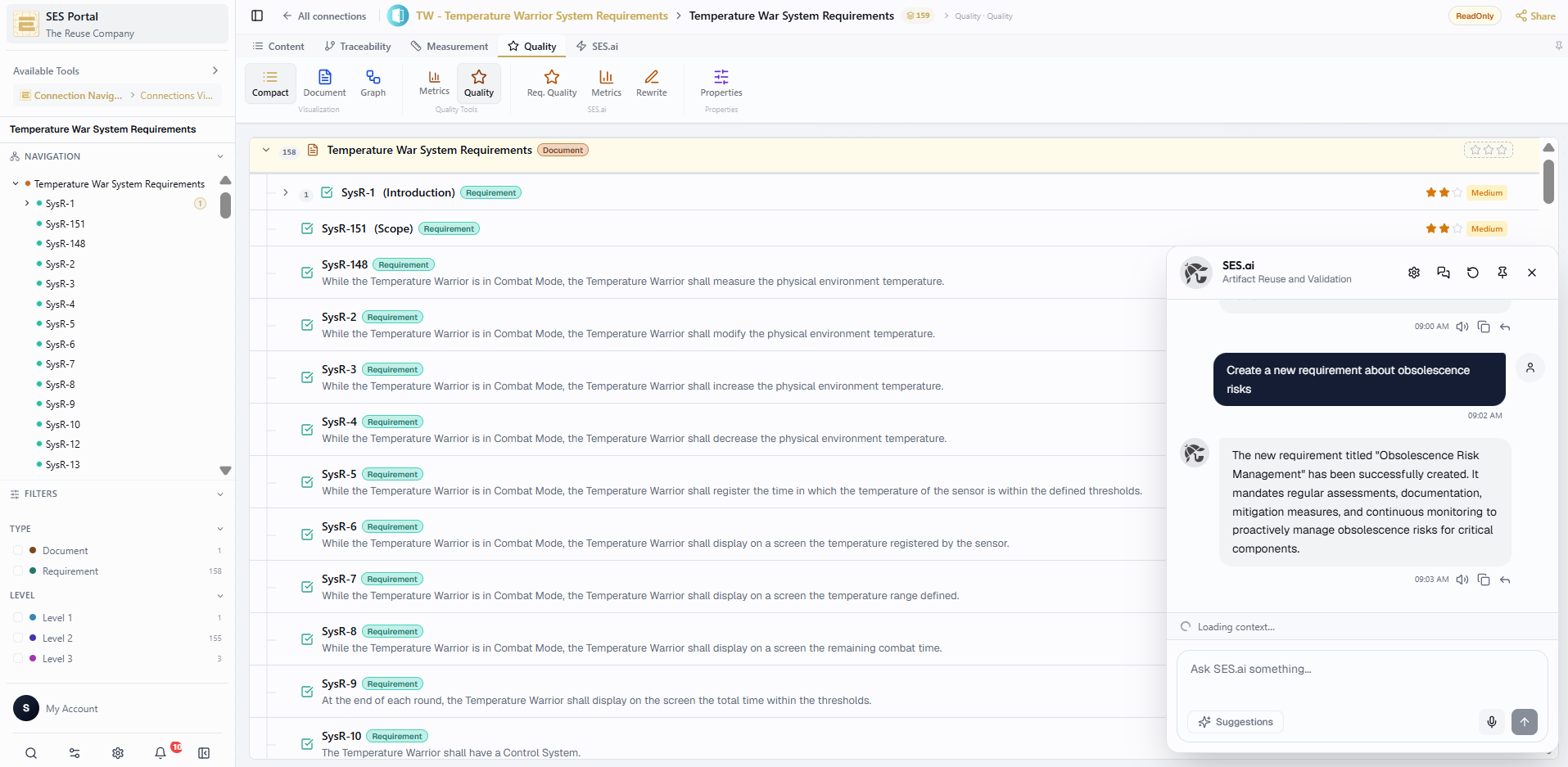
RQA – QUALITY Studio evaluates requirements against configurable quality rules and engineering standards, helping identify ambiguity, incompleteness, duplication, weak wording, and other quality issues.
Semantic Knowledge Management
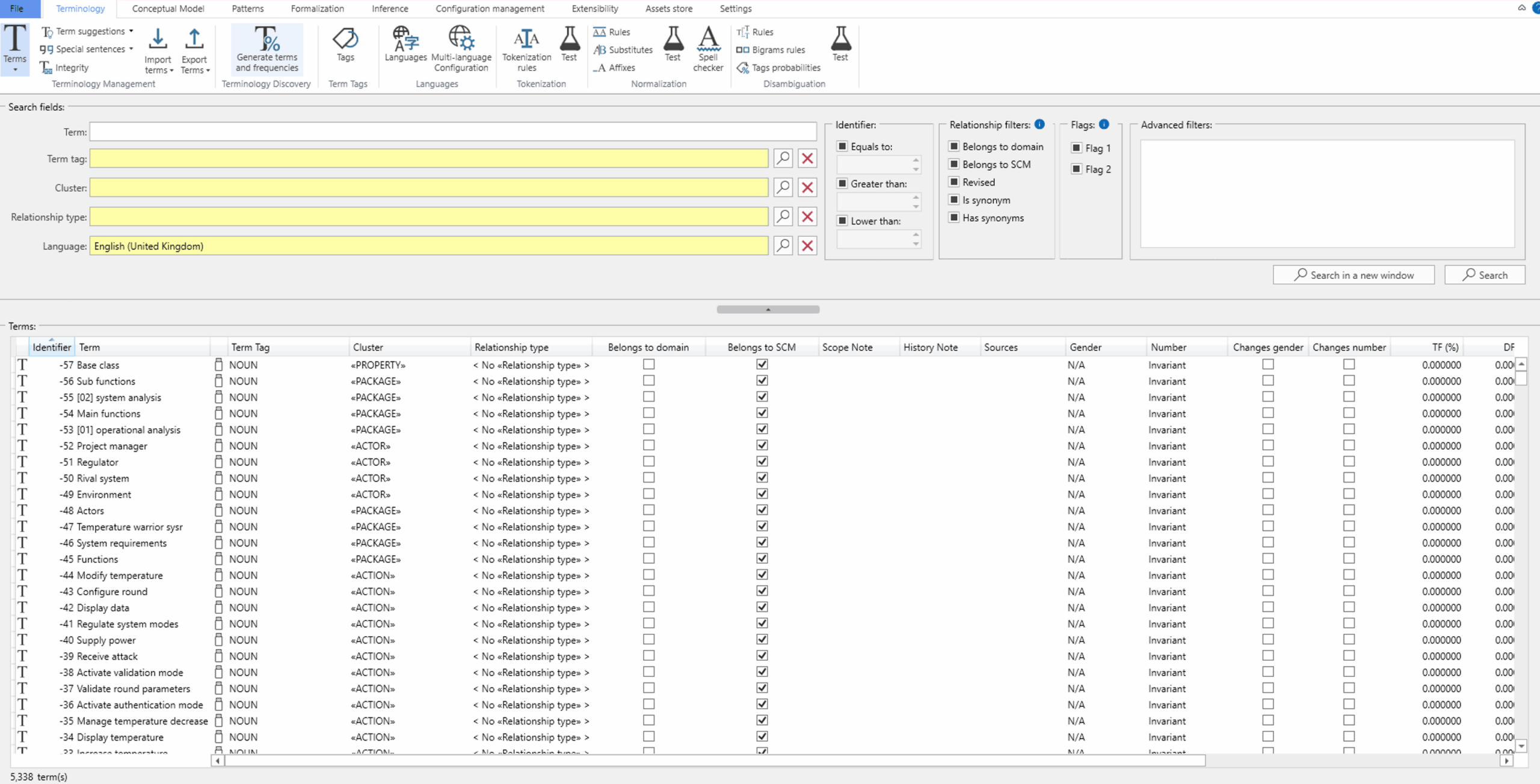
Knowledge Manager enables organizations to capture engineering knowledge through ontologies, taxonomies, controlled vocabularies, and reusable linguistic patterns. This structured knowledge provides valuable context for AI-assisted engineering activities.
AI-Assisted Traceability
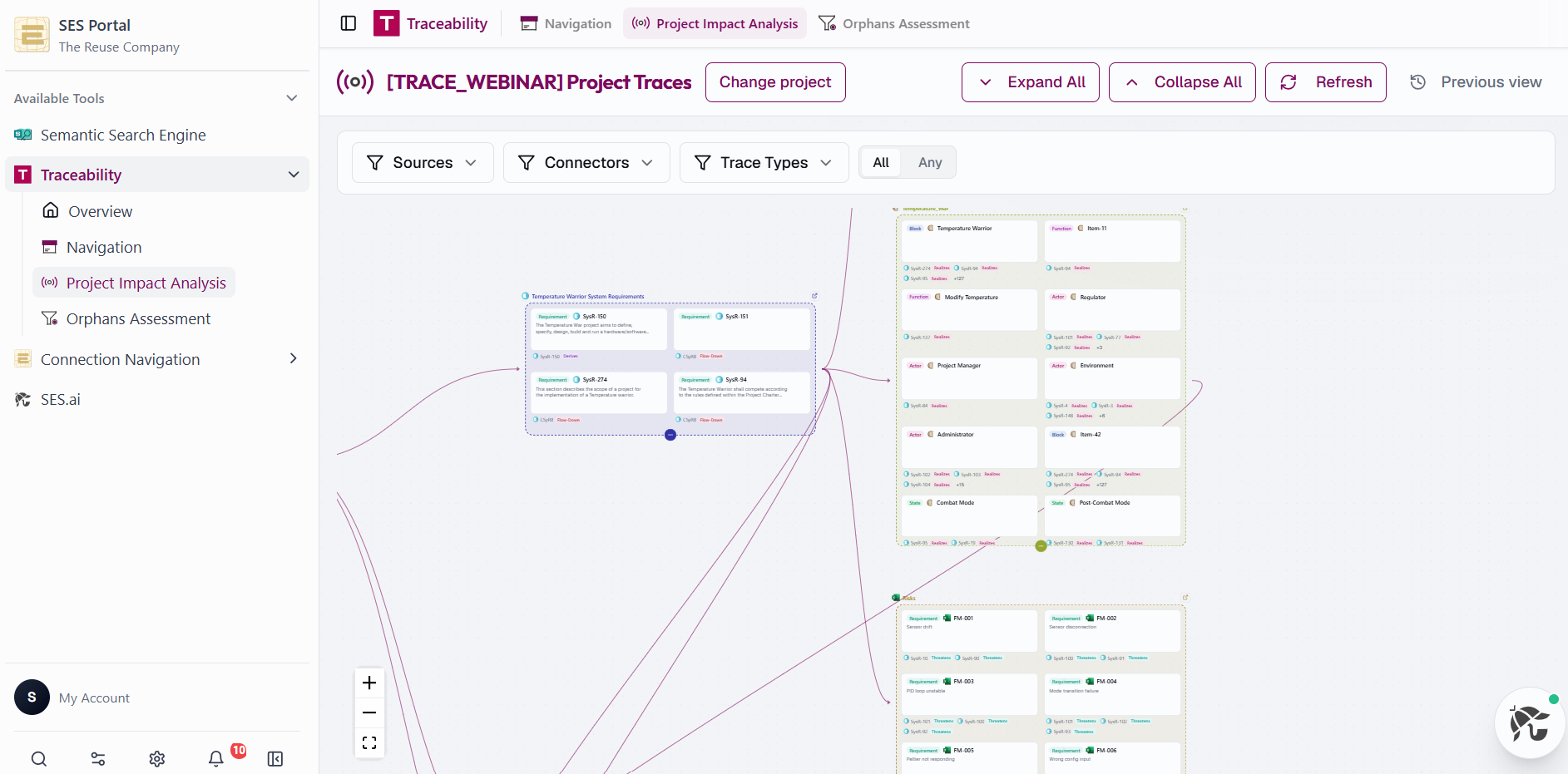
SES ENGINEERING Studio supports AI-assisted identification of traceability relationships across engineering artifacts. Engineers can review and validate suggested links, reducing manual effort while maintaining engineering oversight.
Lifecycle and Verification Support
Requirements are managed throughout the engineering lifecycle, maintaining relationships with verification activities, risks, models, and other engineering artifacts to ensure complete traceability and governance.
The Future Is Collaborative Intelligence
The question is no longer whether AI can write requirements.
It clearly can.
The more important question is:
Can AI help organizations produce better requirements?
The answer is yes – when combined with engineering expertise, quality assessment, structured knowledge, and lifecycle governance.
AI can dramatically accelerate the creation of requirements.
Engineers ensure those requirements are correct.
Engineering platforms such as SES ENGINEERING Studio help ensure they remain high quality throughout the entire systems engineering lifecycle.
Related Links